

AACR
High-risk smoldering multiple myeloma (HR-SMM) is a precursor to symptomatic multiple myeloma, characterized by a significantly increased risk of progression to active disease with organ damage and morbidity. While recent advances, such as the approval of daratumumab (Darzalex®; Johnson & Johnson) for HR-SMM, have delayed progression, a substantial proportion of patients still advance to symptomatic myeloma.
 The CAR-PRISM phase 2 trial, presented at the annual meeting of the American Association for Cancer Research (AACR), held April 17-22, 2026, in San Diego, CA, demonstrates that a single infusion of the BCMA-targeted CAR T-cell therapy ciltacabtagene autoleucel (cilta-cel; Carvykti®; Johnson & Johnson | Legend Biotech) can induce 100% minimal residual disease (MRD) negativity in HR-SMM, with profound and durable responses and a favorable safety profile.
Multiple myeloma (MM) is a malignancy of plasma cells that infiltrates the bone marrow, frequently resulting in bone fractures, anemia, renal impairment, and pain. Smoldering multiple myeloma (SMM) is an asymptomatic precursor condition, marked by an increased burden of abnormal plasma cells and elevated protein markers, but without end-organ damage. Among SMM patients, those classified as high-risk (HR-SMM) are at particularly high risk: approximately 50% will progress to symptomatic MM within two years, a transition that heralds serious complications and a decline in heart-related quality of life (hrQoL)
Historically, the standard management of SMM—especially HR-SMM—has been observation with treatment initiation only upon clear evidence of progression. The recent FDA approval of daratumumab for HR-SMM, based on its ability to delay progression, was a significant advance, but many patients still progress, and the depth of response remains suboptimal.

Chimeric antigen receptor (CAR) T-cell therapy, notably ciltacabtagene autoleucel, which targets B-cell maturation antigen (BCMA) on abnormal plasma cells, has transformed outcomes in relapsed/refractory MM. Data from prior studies suggest that earlier intervention with CAR T-cells may result in deeper and more durable responses, potentially due to greater T-cell fitness and a less suppressive tumor microenvironment. The CAR-PRISM trial was designed to test whether BCMA-directed CAR T-cell therapy could intercept HR-SMM and deliver curative outcomes.
Methods
Study Design and Eligibility
CAR-PRISM is a single-center, phase II, open-label trial evaluating the efficacy and safety of a single infusion of cilta-cel in adults with HR-SMM. HR-SMM was primarily defined by the 20/2/20 model: >20% bone marrow plasma cells, M-protein >2 g/dL, and free light-chain ratio >20. Patients with >40% marrow plasma cells were excluded to reduce risk, as no induction or bridging therapy was administered. Patients were also eligible if they had>10% plasma cells and additional high-risk biomarkers.
Intervention and Endpoints
After screening and leukapheresis, patients received standard lymphodepleting chemotherapy, followed by a single infusion of cilta-cel at doses ranging from 0.3–>0.5×10^6 CAR+ T cells/kg. The protocol included a safety run-in phase and was later amended to reduce the dose in response to observed neurologic toxicities.
The primary endpoint was safety, including dose-limiting toxicities (DLTs) and all adverse events (AEs). Key secondary endpoints included overall response rate, MRD negativity as assessed by next-generation sequencing (sensitivity 10^-6), progression-free survival (PFS), and duration of response.
Results
- Patient Characteristics
Between April 2023 and July 2025, 23 patients were screened and 20 received cilta-cel (median age: 58 years; range 37–78). Sixty-five percent had high-risk cytogenetic abnormalities. The median bone marrow plasma cell infiltration was 20%. All patients met criteria for HR-SMM per protocol. - Safety Outcomes
No protocol-defined DLTs occurred. All patients developed cytokine release syndrome (CRS), but all cases were grade 1 or 2 and manageable. The most common AEs were transient grade 3/4 neutropenia (90%), with a median duration of 7 days, and reversible thrombocytopenia or anemia in a minority of patients. Non-ICANS neurologic toxicities occurred in seven patients—most commonly mild facial nerve palsy, all of which resolved, and three patients with mild persistent symptoms. There were no cases of high-grade CRS, ICANS, hemophagocytic syndrome, severe infection, or secondary malignancy. - Efficacy Outcomes
The efficacy results were remarkable: all 20 patients achieved MRD negativity by 2 months post-infusion, and this was maintained at a median follow-up of 15.3 months. Among 16 patients with at least 6 months’ follow-up, all achieved complete or stringent complete response. No disease progression or deaths were observed. The median PFS and overall survival were not reached. - Biomarker and Dose Insights
Analysis of biomarkers showed robust expansion of CAR+ T cells and rapid reduction in serum soluble BCMA, consistent with rapid tumor clearance. Neurologic toxicity appeared dose-related, prompting reduction of the CAR T-cell dose and preemptive dexamethasone for patients with high lymphocyte counts post-infusion. Patients with neurologic events had greater lymphocyte expansion and higher CD4:CD8 ratios.

Universal and sustained result
The CAR-PRISM trial represents a landmark in the early intervention of high-risk smoldering multiple myeloma. For the first time, a one-time, early intervention with BCMA-directed CAR T-cell therapy has been shown to induce universal and sustained MRD negativity without the need for induction or bridging therapy.
The 100% MRD negativity rate is unprecedented and greatly exceeds what has been achieved with current triplet or quadruplet regimens or even with daratumumab. The results strongly support the hypothesis that the T-cell fitness and lower tumor burden at the HR-SMM stage translate to superior efficacy of CAR T-cell therapy.
The safety profile was favorable, with side effects generally mild and manageable. The absence of high-grade CRS or severe cytopenias—compared to what is seen in relapsed/refractory MM—suggests that early intervention may offer not just greater efficacy, but also improved tolerability, likely due to preserved immune and hematopoietic reserves.
- Clinical Implications
If confirmed in larger and longer-term studies, these results could fundamentally change the management of HR-SMM. Instead of watchful waiting or prolonged antibody therapy, patients may be offered a one-time, potentially curative cell therapy that eradicates the disease before it becomes symptomatic. The potential to intervene before the onset of organ damage and immune suppression is a paradigm shift. - Comparison with Other Studies
Other early-intervention strategies, such as the GEM-CESAR trial or multiagent regimens, have achieved MRD negativity in about half of patients, with durable MRD negativity at 4 years in only a third of patients. The depth and uniformity of response seen in CAR-PRISM is significantly greater.

Future Directions
Further studies should address:
- The durability of MRD negativity and long-term PFS/OS.
- Application to broader SMM and newly diagnosed MM populations.
- Comparative efficacy and safety versus other immunotherapies.
- Optimization of benefit-risk balance with biomarker-guided management.
- Mechanistic studies to explore why responses are so deep and rapid in SMM compared to relapsed MM.
The CAR-PRISM phase 2 trial demonstrates that BCMA-directed CAR T-cell therapy (cilta-cel) can induce rapid, deep, and sustained remissions in high-risk smoldering multiple myeloma, with all patients achieving and maintaining MRD negativity over a median follow-up of 15.3 months. The safety profile is favorable, and the results set the stage for redefining the standard of care in HR-SMM. If durability is confirmed, early intervention with CAR T-cell therapy may offer the possibility of a cure for patients previously relegated to watchful waiting.
Limitations
The study is limited by its single-arm, single-center design, small sample size, and relatively short follow-up.
Exclusion of patients with >40% marrow plasma cells limits generalizability to patients with higher tumor burden. Further validation in multicenter and randomized trials is needed.
Clinical trials
CAR- PRISM (PRecision Intervention Smoldering Myeloma) – ClinicalTrials.gov ID NCT05767359
Highlights of Prescribing Information
Ciltacabtagene autoleucel (cilta-cel; Carvykti®; Johnson & Johnson | Legend Biotech)[Prescribing Infromation]
Daratumumab (Darzalex®; Johnson & Johnson)[Prescribing Information]
References
[1] Nadeem O, Cordas dos Santos D, Nikiforow S, DeBraganca K, Bosch-Vilaseca A, O’Donnell E, Sperling A, Liu Y, Arters F, Marto M, Bergeron A, O’Donnell C, Kineavy B, Swenson E, McHugh K, Berry Q, Wei H, Durlacher E, Grimm E, Montes de Oca R, De Wiest D, Redd R, Trippa L, McIntire C, Smith E, Anderson K, Munshi N, Madduri D, Tendler C, Schecter J, Wildgust M, Ritz J, Ghobrial I. Ciltacabtagene autoleucel in high-risk smoldering myeloma: Results from the CAR-PRISM trial. In: Proceedings of the 117th Annual Meeting of the American Association for Cancer Research; 2026 April 17-22; San Diego, CA.: AACR; 2026. Abstract nr CT103.
[2] Nadeem O, Cordas Dos Santos DM, Nikiforow S, Bosch-Vilaseca A, O’Donnell E, Redd R, DeBraganca KC, Sperling AS, Liu Y, McEntire C, Arters F, O’Donnell C, Kineavy B, Marto M, Bergeron A, Swenson E, McHugh K, Caron A, Berry Q, Wei H, Durlacher E, Grimm E, Corrado F, Bidikian N, Montes de Oca R, Lengil T, De Wiest D, Gervais C, Panaro K, Smith EL, Anderson K, Jacobson C, Munshi NC, Richardson P, Madduri D, Schecter JM, Tendler C, Wildgust MA, Trippa L, Mateos MV, Ritz J, Ghobrial IM. Ciltacabtagene autoleucel in high-risk smoldering multiple myeloma: the CAR-PRISM phase 2 trial. Nat Med. 2026 Apr 20. doi: 10.1038/s41591-026-04365-y. Epub ahead of print. PMID: 42010117.
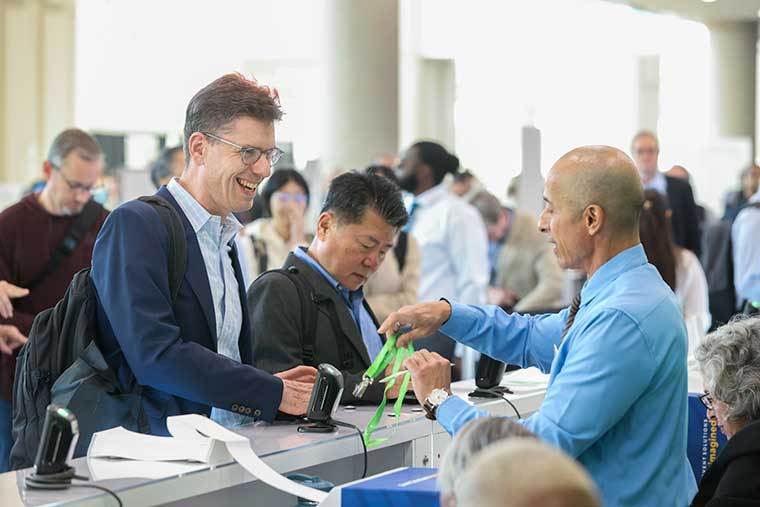
Featured image San Diego, CA – The AACR 2026 Annual Meeting – Photo courtesy © 2026 AACR/Luke Franke
DOI