

AACR
Chimeric antigen receptor (CAR) T-cell therapies have revolutionized the treatment of hematologic malignancies but have faced significant challenges in solid tumors and long-term persistence due to T-cell exhaustion and ‘always-on’ tonic signaling.
 Verismo Therapeutics’ novel multi-chain killer immunoglobulin-like receptor (KIR)-CAR platform, inspired by natural killer (NK) cell biology, seeks to overcome these limitations. The company’s platform technology is based on the fact that, while NK cells are known for their powerful innate antitumor activity, they are short-lived. In contrast, T-cells persist for years or even decades. SynKIR™ combines the power of NK cell KIR receptors with the long-term durability of T-cells. In mouse models, this results in a long-lasting and powerful anti-cancer efficacy.
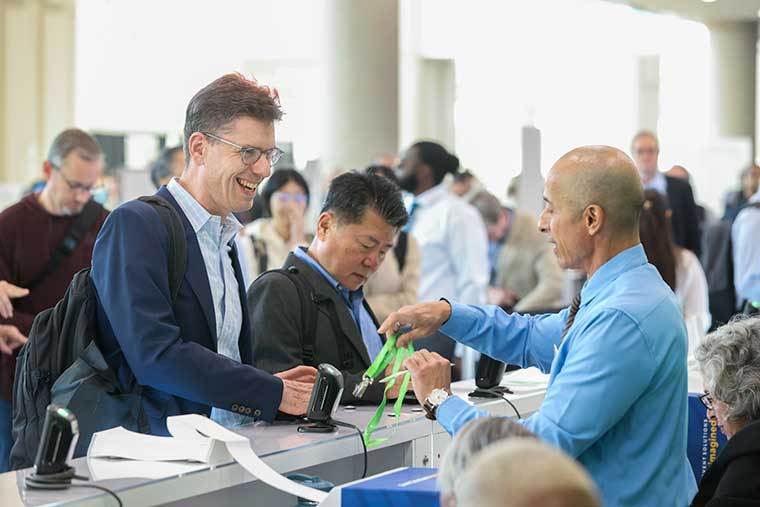
At the annual meeting of the American Association for Cancer Research (AACR), held April 17 – 22, 2026, in San Diego, CA, initial clinical and preclinical data for the lead KIR-CAR candidates SynKIR™-110 and SynKIR™-310 were presented, marking a milestone in the advancement of multi-chain KIR-CAR immunotherapies.*
KIR-CAR Platform
Unlike conventional single-chain CD3-based CAR T-cell designs, the KIR-CAR platform uses a split-signal system comprising an NK cell-derived killer immunoglobulin-like receptor (KIR) paired with the DNAX-activation protein of 12 kDa (DAP12), enabling physiologic activation and rest cycles. This architecture allows a more natural cellular activation/rest cycle upon target cell engagement and disengagement, reducing tonic signaling and exhaustion while improving persistence and function in the tumor microenvironment. The result is a cell therapy platform with enhanced resistance to immunosuppression and potential for durable responses in both solid and hematologic malignancies.
SynKIR™-110 in Mesothelin-Expressing Solid Tumors
Due to its overexpression in tumors compared with normal or healthy cells, mesothelin (MSLN) is considered an attractive target for CAR T-cell therapy in solid tumors. Both in vitro and in vivo, SynKIR™-110, a mesothelin-targeting autologous KIR-CAR T-cell therapy, demonstrated sustained killing of MSLN+ targets with minimal activation or cytokine production against MSLN cells compared to ‘conventional’ CAR T-cells, supporting the investigational drug as a promising candidate with improved safety and efficacy for targeting of MSLN tumors. [1]
The STAR-101 Phase 1 clinical trial (NCT05568680) further evaluated SynKIR™-110 in patients with advanced, refractory solid tumors, including ovarian cancer, mesothelioma, and cholangiocarcinoma. In the initial three-dose cohorts (1–10 × 10^7 cells/m² following lymphodepletion), nine heavily pretreated patients were treated. No dose-limiting toxicities or protocol-defined stopping events occurred. [2]
Three patients (33%) experienced low-grade cytokine release syndrome; no neurotoxicity was observed. Hematologic adverse events were consistent with prior chemotherapy. SynKIR™-110 persisted in peripheral blood and induced effector cytokine peaks consistent with expected CAR T-cell kinetics. Tumor responses were seen in four patients, with one partial response maintained for six months. The maximum tolerated dose (MTD) had not been reached at the data cutoff, and dose escalation is ongoing.
SynKIR™-310 in B Cell Non-Hodgkin Lymphoma
Over half of all patients dignosed with B-cell non-Hodgkin lymphoma (B-NHL), a cancer of the lymphatic system, representing 85%–90% of all NHL case, who have been treated with a FDA-approved CD19-targeting CAR T-cell therapy**, experience progressive disease within 1 year [1] Early clinical and preclinical data for SynKIR™-310, a CD19-targeted multi-chain KIR-CAR T-cell, were presented from the CELESTIAL-301 Phase 1 trial (NCT06544265) and supporting animal models. In B-NHL xenograft mouse models, SynKIR™-310 demonstrated superior tumor control and survival compared to single-chain CD3-based CAR T-cell therapies, with reduced systemic cytokine release.[3][4][5]
Early clinical data also showed promising anti-tumor activity and favorable tolerability in relapsed/refractory B-NHL patients, including those previously treated with other CAR T therapies. SynKIR™-310 exhibited a potentially improved benefit-risk profile compared to conventional CD3-based CAR T, meriting continued clinical investigation.
EGFR-Targeted KIR-CAR for Glioblastoma
Patients diagnosed with high-grade glioma (HGG; glioblastoma/GBM), the most common primary malignant brain tumor, have a poor prognosis and cannot be cured. Despite standard treatment of resection, chemotherapy, and radiotherapy, median survival remains limited, with a prognosis of 15-18 months, depending on histological subtype, tumor grade, cytogenetic analysis, age, and performance status at the time of diagnosis. [6]
Recent clinical trials investigating autologous chimeric antigen-receptor (CAR) T-cells targeting epidermal growth factor receptor (EGFR) variants in GBM through single-chain variable fragments (scFv) recombined with 41BB-co-stimulation and CD3ζ activation showed encouraging radiographic evidence of early tumor reductions, within days of CAR T-cell treatment. However, researchers observed that this anti-tumor benefit was short-lived, with tumor outgrowth generally occurring within days to weeks, which they attributed to rapid loss of T-cell function due to exhaustion or target-antigen loss.
Preclinical results from collaborative research with the University of Pennsylvania showcased an EGFR-targeted multi-chain KIR-CAR T cell. In glioblastoma models, this approach overcame functional deficits seen in CD3-based CAR T-cells, resulting in superior tumor regressions and increased survival in vivo. [7]
The KIR-CAR T-cells displayed reduced exhaustion, an increased naïve-like phenotype, and sustained anti-tumor functionality, demonstrating strong potential for clinical translation in glioblastoma and other solid tumors resistant to current CAR T modalities.
Efficacy and safety
These data represent the first clinical evidence of efficacy and safety for multi-chain KIR-CAR T cell therapies in humans, supporting the platform’s ability to address high unmet needs in both solid and hematologic malignancies. The KIR-CAR strategy provides a physiologically relevant, finely tuned activation mechanism that limits exhaustion and enhances persistence, characteristics essential for overcoming tumor immune evasion and treating historically refractory cancers.
Based on the results of clinical and preclinical studies, Verismo’s SynKIR™-110 and SynKIR™-310 are the first multi-chain KIR-CAR-based immuno-oncology therapies to enter human trials, with promising early results in mesothelin-expressing solid tumors and B-cell non-Hodgkin lymphoma.
Ongoing clinical trials and preclinical developments—including EGFR-KIR-CAR for glioblastoma—herald a new era for engineered cell therapies, potentially expanding the reach and durability of CAR T therapy across cancer types.
__
Note:* All studies were funded by Verismo Therapeutics and supported by HLB Innovation.
** CD19-targeted CAR T-cell therapies currently approved by the US Food and Drug Administration (FDA) include axicabtagene ciloleucel (Yescarta®; Kite Pharma), tisagenlecleucel (Kymriah®, Novartis), lisocabtagene maraleucel (Breyanzi®; Juno Therapeutics, a Bristol Myers Squibb company), and brexucabtagene autoleucel (Tecartus®; Kite Pharma).
Clinical trials
SynKIR-110 for Mesothelin Expressing Ovarian Cancer, Cholangiocarcinoma or Mesothelioma – ClinicalTrials.gov ID NCT05568680
SynKIR-310 for Relapsed/Refractory B-NHL – ClinicalTrials.gov ID NCT06544265
Reference
[1] Yucel N, Nunez-Cruz S, Leferovich J, Truong T, Blair M, Xu J, Milone MC, Johnson LA. A novel NK-cell based split-signaling killer immunoglobulin receptor (KIR)-based CAR T targeting mesothelin, SynKIR-110, shows increased safety profile and increased efficacy in vitro and in vivo. JITC Nov 2025. 13(Suppl 2):A336-A336 / DOI:10.1136/jitc-2025-SITC2025.0298. Abstract 298
[2] Tanyi JL, Haas A, O’Hara M, Gahvari Z, Al-Rajabi R, Altan M, Sterman D, Winters E, Campanile A, Howard S, Luke R, Truong T, Blair M, Yucel N, Xu J, Siegel DL, June CH, Milone MC, Johnson LA. Initial results of a first-in-human dose-escalation study of KIR-CAR in patients with advanced mesothelin-expressing solid tumors. In: Proceedings of the 117th Annual Meeting of the American Association for Cancer Research; 2026 April 17-22; San Diego, CA.: AACR; 2026. Abstract nr CT104.
[3] Blair MC, Xu J, Yucel N, Truong T, Stanley W, Tees M, Dermody O, Howard SK, Campanile A, Milone M, Siegel DL, Johnson LA. Novel SynKIR-310 outperforms CD3-based second-generation CD28 or 41BB co-stimulated CAR T in B-cell non-Hodgkin lymphoma xenograft mice and shows early clinical signal. In: Proceedings of the 117th Annual Meeting of the American Association for Cancer Research;
2026 April 17-22; San Diego, CA.: AACR; 2026. Abstract nr 5193 / 11.
[4] Cappell KM, Kochenderfer JN. Long-term outcomes following CAR T cell therapy: what we know so far. Nat Rev Clin Oncol. 2023 Jun;20(6):359-371. doi: 10.1038/s41571-023-00754-1. Epub 2023 Apr 13. PMID: 37055515; PMCID: PMC10100620.
[5] Wang E, Wang LC, Tsai CY, Bhoj V, Gershenson Z, Moon E, Newick K, Sun J, Lo A, Baradet T, Feldman MD, Barrett D, Puré E, Albelda S, Milone MC. Generation of Potent T-cell Immunotherapy for Cancer Using DAP12-Based, Multichain, Chimeric Immunoreceptors. Cancer Immunol Res. 2015 Jul;3(7):815-26. doi: 10.1158/2326-6066.CIR-15-0054. Epub 2015 May 4. PMID: 25941351; PMCID: PMC4490943.
[6] Sizoo EM, Braam L, Postma TJ, Pasman HR, Heimans JJ, Klein M, Reijneveld JC, Taphoorn MJ. Symptoms and problems in the end-of-life phase of high-grade glioma patients. Neuro Oncol. 2010 Nov;12(11):1162-6. doi: 10.1093/neuonc/nop045. Epub 2010 Jan 27. PMID: 20511193; PMCID: PMC3098016.
[7] Xu J, Thokala R, Yin Y, Xu C, Boesteanu AC, Cogdill AP, Binder ZA, Zhang L, Zhang JV, Wang E, June CH, O’Rourke DM, Milone MC, Johnson LA. Natural killer cell-based signaling in EGFR-targeted KIR-CAR T overcomes CD3-based CAR T functional deficits to eliminate resistant glioblastomas in vivo. In: Proceedings of the 117th Annual Meeting of the American Association for Cancer Research;
2026 April 17-22; San Diego, CA.: AACR; 2026. Abstract nr LB138 / 3
Featured image: AACR 2016 Annual Meeting. Photo courtesy © 2016 – 2026 AACR/Todd Buchanan. Used with permission.
DOI